06 Aug The Hidden Cost of Missed Dental Cleanings for Homebound Patients

Key Takeaways
- For homebound patients, missed dental cleanings can lead to more than plaque buildup. They can contribute to pain, infection, trouble eating, tooth loss, and avoidable dental emergencies.
- Dental problems may progress quietly, especially for patients with dementia, communication challenges, complex medical needs, or limited ability to maintain daily oral hygiene.
- Preventive dental visits help identify small concerns early, including gum inflammation, cavities, dry mouth, denture problems, and signs of infection.
- Oral health is connected to overall health. For medically complex patients, untreated dental disease may affect comfort, nutrition, diabetes management, and respiratory risk.
- In-home dental care can reduce barriers for patients who have difficulty traveling to a traditional dental office, making preventive care more accessible, comfortable, and consistent.
- Professional cleanings also give caregivers practical guidance on daily oral hygiene, denture care, and signs that a patient may need dental attention.
For many homebound patients, an in-home dental cleaning may seem easy to postpone. When someone is managing mobility limitations, dementia, Parkinson’s disease, chronic pain, complex medical needs, or transportation challenges, preventative dental care can fall behind more urgent daily concerns.
But for patients who cannot easily leave home, missed cleanings can carry a much higher cost than many families realize. What begins as plaque buildup or gum irritation can quietly develop into pain, infection, difficulty eating, tooth loss, and broader health concerns that affect overall health and quality of life.
Oral Health Problems Can Progress Quietly
Dental disease does not always begin with obvious pain. Gum inflammation, early cavities, ill-fitting dentures, dry mouth, and plaque buildup may go unnoticed by the patient or caregiver, especially when the patient has cognitive impairment, communication challenges, or multiple health concerns.
Older adults are at increased risk for several oral health problems, including dry mouth, root cavities, periodontal disease, and tooth loss. The American Dental Association also notes that physical, sensory, and cognitive changes associated with aging can make home oral hygiene and communication about dental symptoms more challenging.1
This is why professional dental cleanings for homebound patients matter. A dental cleaning is not just about polishing teeth. It gives the dental team an opportunity to evaluate the mouth, remove buildup that brushing cannot fully address, check for infection, assess dentures or restorations, and identify small problems before they become painful or complex.
The Cost Is Not Only Financial
When preventative dental care is delayed, treatment often becomes more complicated. A cavity that may have been manageable early can turn into a broken tooth or infection. Gum disease can contribute to loose teeth, bleeding, discomfort, and eventual tooth loss. Dentures that no longer fit properly can create sores, limit food choices, and make eating uncomfortable.
For a homebound patient, these problems can quickly affect daily life. Dental pain may make it harder to eat well, sleep comfortably, participate in care routines, or cooperate with caregivers. A patient who already has limited energy or mobility may become less willing to brush, chew, speak, or accept assistance with oral hygiene.
The National Institute on Aging emphasizes that oral health remains important as people age, and that issues such as tooth decay, gum disease, dry mouth, oral cancer, and denture problems can affect comfort and health.2
Dental Infections Can Affect the Whole Body
Oral health is closely connected to overall health. For medically complex patients, oral infections and inflammation can become part of a larger health picture.
This is especially important for patients with diabetes. The CDC states that gum disease is more common in people with diabetes and that regular dental exams can help prevent or delay gum disease and other oral health problems.3
Oral hygiene may also be an important consideration for patients at risk of respiratory complications. The CDC has identified oral care as a modifiable factor in reducing the risk of non-ventilator healthcare-associated pneumonia in hospital settings.4 Research on long-term care residents has also identified poor oral hygiene, denture use, and missing teeth as additional risk factors for aspiration pneumonia.5
For frail older adults, these connections are one reason preventative dental care should be considered part of overall health support, not an optional extra.
Homebound Patients Face Unique Barriers
Many patients do not fall behind on dental care because they do not value it. They fall behind because getting to an office may be physically exhausting, medically complicated, or emotionally overwhelming.
A simple appointment may require arranging transportation, transferring from bed to wheelchair, managing medications, coordinating caregivers, navigating stairs or elevators, and tolerating an unfamiliar environment. For patients with dementia or developmental disabilities, a traditional office setting can also increase anxiety, confusion, or overstimulation.
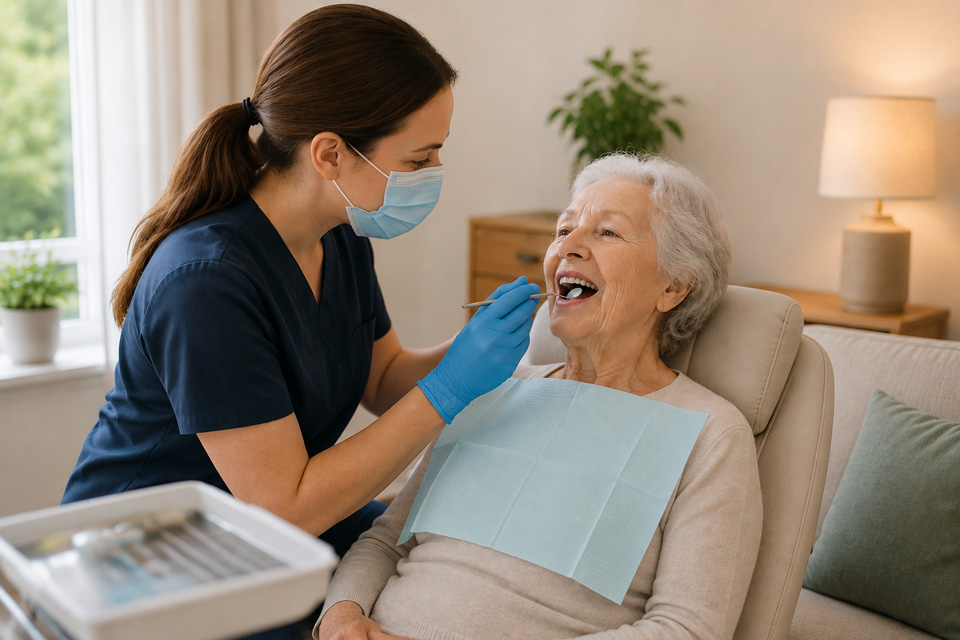
House Call Dentists was created to help remove those barriers. The practice provides mobile dental services for people who are homebound or have difficulty traveling to a dentist. Using portable dental technology, the team can provide in-home exams, cleanings, dentures, fillings, crowns, extractions, palliative care, and emergency treatment in the comfort and safety of the patient’s home.
For homebound patients, bringing care into a familiar environment can make treatment more comfortable and less disruptive. House Call Dentists notes that patients may experience less anxiety and less disruption to their routines when care is provided at home, and that patients with memory or cognitive disabilities may be better able to cooperate in familiar surroundings.
Cleanings Can Reveal More Than Plaque
A preventative dental visit can help answer important questions for families and caregivers:
- Is the patient chewing comfortably?
- Are dentures causing sores or slipping?
- Is dry mouth increasing cavity risk?
- Are there signs of infection, bleeding, swelling, or loose teeth?
- Does the patient need a different oral hygiene routine?
- Could a dental issue be contributing to poor appetite, agitation, or discomfort?
During a house call visit, House Call Dentists can perform an exam, take diagnostic photographs, use digital X-rays when needed, provide emergency care, complete in-home treatments, and offer education for families and caregivers.
That education can be especially valuable. Caregivers often want to help but may not know how to safely brush the teeth of someone with limited cooperation, dry mouth, sensitive gums, or dentures. Small changes in daily care can make a meaningful difference between professional visits.
Prevention Protects Comfort, Nutrition, and Dignity
For homebound patients, the goal of dental care is not only to prevent cavities. It is to preserve comfort, dignity, nutrition, and quality of life.
A healthy mouth can make it easier to eat nourishing foods, speak clearly, smile comfortably, and avoid preventable pain. For patients with complex medical needs, it can also reduce the chance that a dental concern becomes an emergency.
Families often call for help when a loved one is already in pain. But preventative cleanings can reduce the likelihood of reaching that crisis point. They give patients, caregivers, and clinicians a clearer picture of what is happening and what can be done before treatment becomes more involved.
A Better Way to Provide Preventative Dental Care at Home
Homebound patients deserve access to the same kind of preventative care that other patients receive in a dental office. The difference is that the care may need to come to them.
House Call Dentists works with patients, families, caregivers, referring dentists, physicians, and other healthcare providers to determine the safest and most appropriate treatment plan. The practice also provides care coordination to assist with scheduling, treatment planning, provider communication, referrals, and related needs.
When a patient has trouble traveling, preventative dental care should not disappear from the care plan. An in-home dental cleaning can help protect oral health, reduce discomfort, support overall wellness, and give families peace of mind.
If your loved one is homebound, medically complex, or unable to tolerate a traditional dental office visit, contact House Call Dentists to learn whether an in-home dental cleaning or house call dental visit may be appropriate.
Footnotes
- American Dental Association, “Aging and Dental Health.” https://www.ada.org/resources/ada-library/oral-health-topics/aging-and-dental-health
- National Institute on Aging, “Taking Care of Your Teeth and Mouth.” https://www.nia.nih.gov/health/teeth-and-mouth/taking-care-your-teeth-and-mouth
- Centers for Disease Control and Prevention, “Promoting Oral Health.” https://www.cdc.gov/diabetes/hcp/clinical-guidance/how-to-promote-oral-health-for-people-with-diabetes.html
- Centers for Disease Control and Prevention, “Oral Health in Healthcare Settings to Prevent Pneumonia Toolkit.” https://www.cdc.gov/healthcare-associated-infections/hcp/prevention-healthcare/oral-health-pneumonia-toolkit.html
- Marusiak MJ, et al., “Professional oral health care prevents mouth-lung infection in long-term care home residents.” https://pmc.ncbi.nlm.nih.gov/articles/PMC10662425/