19 Mar Home Is the New Healthcare Hub: Why In-Home Dentistry Is Crucial to the Future of Dental Care

Not long ago, healthcare meant fluorescent waiting rooms, clipboards, and appointments scheduled weeks or months in advance.
But a quiet shift is happening.
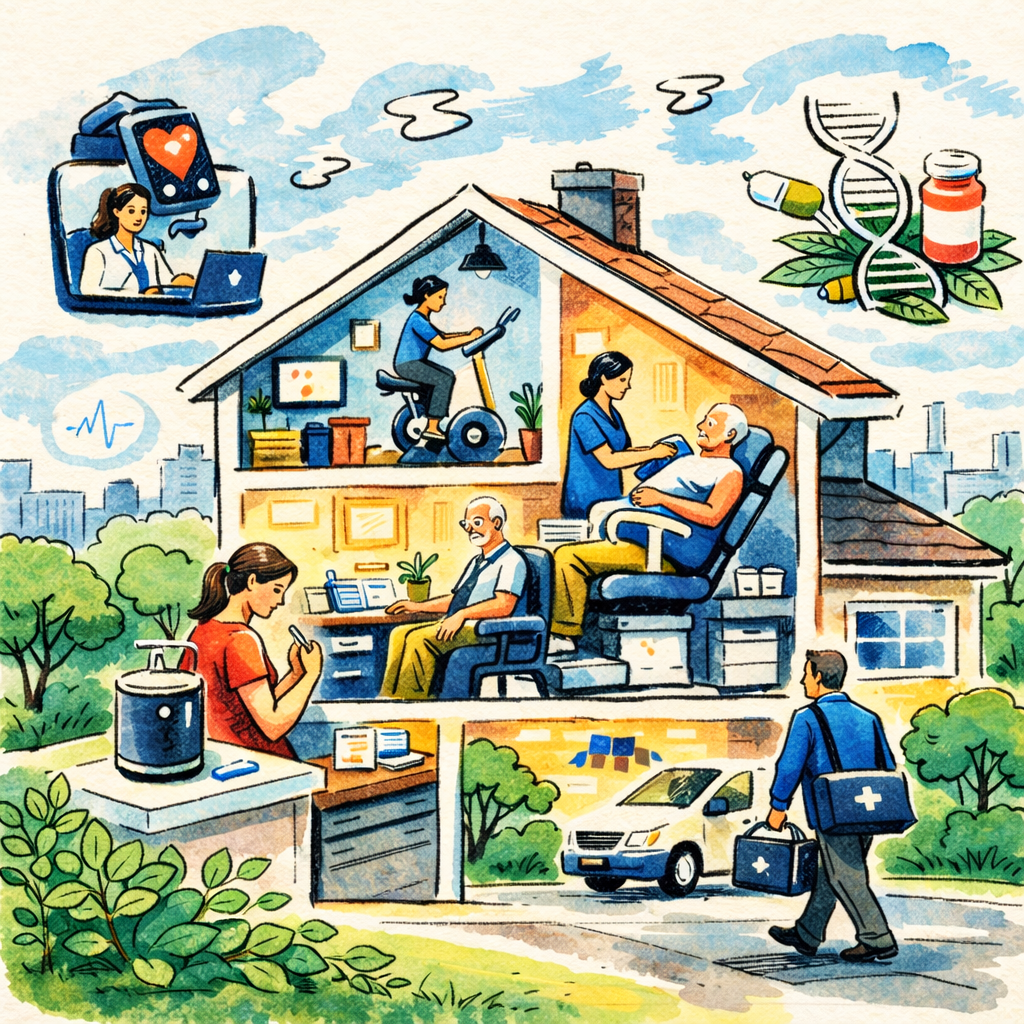
Across medicine, care is increasingly moving out of hospitals and clinics and into the spaces where people actually live. From telehealth to in-home dentistry, healthcare is becoming more accessible than ever. Virtual visits now happen from the kitchen table. Wearables track heart rate and sleep from the wrist. Mail-in diagnostic kits arrive in discreet boxes at the front door.
The result is a subtle but profound transformation: the home is becoming a healthcare center.
Even the way patients think about access to doctors is changing. Concierge medicine, once considered a niche luxury, is now one of the fastest-growing models in healthcare, built around convenience, direct access, and personalized care. Concierge practices meet the growing demand from patients who want more responsive, relationship-driven care.
That shift reflects a broader cultural moment. People are increasingly approaching health the way they approach everything else in modern life: on-demand, personalized, and integrated into everyday routines.
And dentistry, quietly but steadily, has already moved into this new model.
When a Dentist Comes to You: How In-Home Dental Care Works
For decades, dental care followed the same pattern: patients traveled to the office, sat in the waiting room, and received treatment in a clinical setting designed around equipment rather than comfort.
But for many patients, that model never worked well.
Older adults, patients with mobility challenges, individuals with complex medical conditions, or people with severe dental anxiety have faced significant barriers to accessing traditional dental care. Even busy professionals have found it difficult to carve out time for multiple appointments.
In-home dentistry changes the equation.
Instead of asking patients to navigate traffic, transportation, or physical limitations, the dental team comes directly to them. Portable technology allows dentists to perform exams, digital X-rays, cleanings, and many restorative procedures right in the patient’s home, similar to what you would expect from a traditional dental office or clinic.
Practices like Blende Dental Group: Home of the House Call Dentists, specializing in mobile dental services, have been delivering this model of care for years, bringing comprehensive dental treatment to patients in private residences, assisted living communities, hospitals, and other care settings.
The Convenience Economy Meets Healthcare
Part of the reason the home-health movement has accelerated is simple: convenience.
Consumers today expect services to meet them where they are. Groceries arrive at the doorstep. Fitness classes stream into living rooms. Work meetings happen from laptops at the kitchen table.
Healthcare is beginning to reflect those same expectations.
Concierge medicine, remote monitoring, and virtual consultations all point toward a system that values time, accessibility, and personalization. Patients want care that fits seamlessly into their lives rather than requiring them to rearrange their lives around it.
In-home dentistry fits naturally within this ecosystem.
It offers many of the same benefits patients seek in concierge healthcare—greater comfort, more individualized attention, and easier access to care—but without requiring membership programs or ongoing subscription fees.
In other words, in-home dentistry can deliver a concierge-level experience where patients need it most: at home.
Who Benefits Most from In-Home Dental Care
In-home dental care is especially beneficial for:
- Seniors and homebound patients
- Individuals with mobility challenges
- Patients with dental anxiety
- Busy professionals with limited time
- Patients recovering from surgery or managing complex medical conditions
For many of these individuals, access to a mobile dentist or house call dentist can mean the difference between receiving consistent care and going without treatment altogether.
Why the Home Environment Matters
There is also a clinical reason home-based care is gaining momentum: patients often do better in familiar environments.
For individuals with Alzheimer’s disease or dementia, traveling to a dental office can cause confusion and agitation. Children with autism or sensory sensitivities may find clinical settings overwhelming. Patients with severe dental phobia often postpone treatment entirely because the office experience triggers anxiety.
Receiving care at home can dramatically change those dynamics.
In familiar surroundings, patients tend to feel calmer and more cooperative. The experience becomes less disruptive and less intimidating. Families and caregivers can remain present throughout the process, helping patients feel supported and secure.
In many cases, this approach makes dental care possible for patients who might otherwise go without treatment entirely.
The Technology Behind Mobile Dental Care
The growth of in-home dentistry has also been fueled by advances in mobile dental technology.
Today’s portable equipment allows dental teams to bring sophisticated diagnostic and treatment tools directly to the patient. Digital X-ray systems, mobile operatories, and modern sterilization protocols make it possible to deliver high-quality care outside a traditional clinic setting.
Mobile dentistry teams can perform a wide range of services, from exams and preventive cleanings to restorative procedures and emergency care at home, while maintaining the same professional standards found in a dental office.
The result is a model of care that combines clinical excellence with unmatched convenience.
Aging in Place… and Staying Healthy
Another major force behind the home-health movement is demographic change.
The population is aging rapidly, and more older adults are choosing to age in place rather than move into institutional care settings. That means healthcare services must increasingly adapt to meet patients where they live.
Dental care is a critical part of that equation, offering a more accessible alternative through in-home dental care.
Oral health affects nutrition, speech, infection risk, and overall quality of life, yet many homebound seniors struggle to access routine dental treatment. Transportation challenges, medical complexity, and caregiver logistics can all stand in the way.
By bringing dental services directly into the home, mobile dentistry helps close that gap and ensures patients can maintain their oral health without leaving their living environment.
A Return to an Old Idea
The concept of healthcare delivered at home is not new at all.
Decades ago, physicians routinely visited patients in their homes. Those house calls gradually disappeared as medicine became more centralized around hospitals and clinics.
Today, technology and shifting patient expectations are bringing that model back, updated for a modern healthcare landscape.
From telemedicine to remote monitoring to mobile dentistry, the future of care is becoming more decentralized, more personalized, and more accessible.
The Center of Care
Healthcare will always require hospitals and clinical facilities. But the boundaries of care are expanding beyond those walls.
The home is no longer just a place for recovery. It is becoming a place for prevention, monitoring, treatment, and wellness.
Because, increasingly, a crucial healthcare hub isn’t a building. It’s where you live.
If you or a loved one needs in-home dental care, House Call Dentists provides professional, comfortable care wherever you are.
Schedule an in-home dental visit today and experience care designed around you.
For more details, call us at (800) 395-1152.