09 Sep Caregiver Burnout: When Dental Care Becomes One More Thing to Manage

Key Takeaways
- Nearly one in four U.S. adults is now a family caregiver, and many are responsible for coordinating complex healthcare needs.
- Dental care can become particularly difficult to manage when a loved one has mobility limitations, cognitive impairment, or complex medical needs.
- Oral health still matters when someone becomes homebound or increasingly dependent on others for daily care.
- Bringing in-home dental care to the patient can eliminate some of the transportation, scheduling, and logistical challenges caregivers face.
Caring for someone you love can involve an extraordinary number of responsibilities.
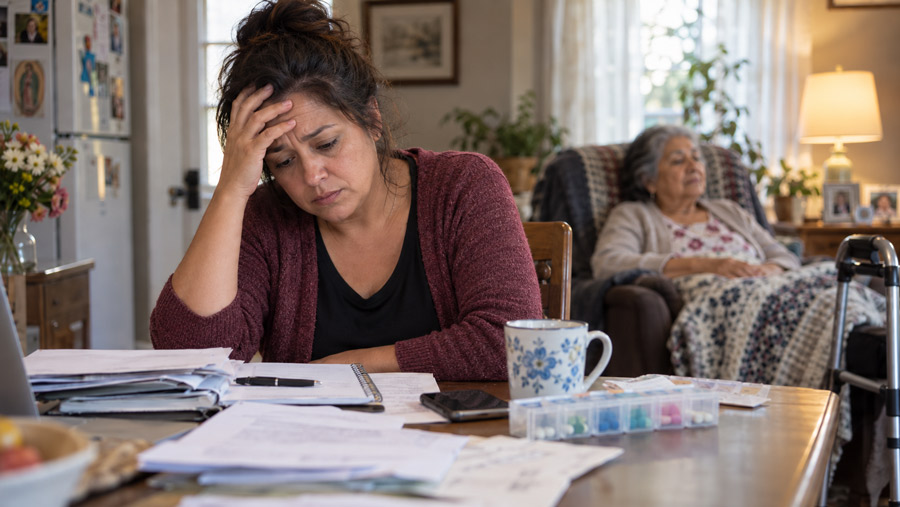
There are medications to organize, medical appointments to schedule, meals to prepare, transportation to arrange, paperwork to complete, and changes in health or behavior to monitor. For many caregivers, these responsibilities are layered on top of careers, children, relationships, and their own healthcare needs.
It is not surprising that caregivers can become overwhelmed.
According to the 2025 Caregiving in the US report from AARP and the National Alliance for Caregiving, 63 million Americans, nearly one in four adults, provide ongoing care for someone with a complex medical condition or disability. Seventy percent of family caregivers monitor their care recipient’s health conditions and coordinate care, while 64% report experiencing emotional stress related to caregiving.1
When so much needs attention, dental care can become one more thing to manage.
For family caregivers supporting someone who is homebound, medically complex, or living with dementia, coordinating dental care can become especially difficult.
The Growing Weight of Caregiving
Caregiver burnout is more than simply having a busy schedule. The demands of caregiving can affect physical health, emotional well-being, work, finances, and relationships.
The latest national caregiving research found that one in five caregivers rates their own health as fair or poor, while nearly one-quarter reports having difficulty caring for themselves because of their caregiving responsibilities.2
For caregivers of older adults, those demands can be particularly significant. More than 51 million Americans provide care to someone age 50 or older. On average, these caregivers spend 26 hours each week providing care, and nearly one in four is caring for someone with a memory issue or form of dementia.3
Against that backdrop, even a seemingly routine task, like scheduling a dental cleaning, can become complicated.
Why Dental Care Can Be Particularly Difficult to Coordinate
For someone who is healthy and independent, visiting the dentist may mean making an appointment and driving to the office.
For someone who is homebound, medically complex, physically disabled, or living with dementia, accessing dental care can look very different.
A caregiver may need to determine whether the patient can safely leave home, arrange accessible transportation, coordinate the appointment around medications or other healthcare visits, accompany the patient, communicate medical information, and manage anxiety or behavioral challenges once they arrive.
Research on oral healthcare for dependent older adults has identified transportation and the lack of suitable treatment facilities among significant barriers to receiving dental treatment.4
Dental care may consequently move lower on a caregiver’s list—not because it is unimportant, but because simply getting someone to a dental office can require considerable effort.
Oral Health Doesn’t Stop Mattering When Someone Becomes Homebound
The need for oral healthcare does not disappear when a person becomes less mobile or increasingly dependent on others.
In fact, some older adults may need more assistance maintaining their oral health. The Centers for Disease Control and Prevention notes that caregivers may need to help older adults brush and floss when they are unable to do so effectively themselves. The CDC also emphasizes daily denture care and ongoing dental attention for older adults who are homebound or living in care settings.5
Oral discomfort can also be difficult for some patients to communicate. Someone living with dementia, a neurological condition, or another cognitive impairment may not always be able to clearly explain that a tooth hurts, a denture no longer fits properly, or something feels different in their mouth.
Changes such as difficulty eating, avoiding certain foods, increased agitation, facial swelling, bad breath, bleeding gums, or a change in how dentures fit can all be reasons to seek professional dental guidance.
For caregivers already tracking dozens of other details, knowing where to turn for that guidance can make a meaningful difference.
What If the Dentist Could Come to the Patient?
One way to reduce the logistical burden is to change where dental care happens.
For patients who have difficulty traveling to a traditional dental office, House Call Dentists provides in-home dental care using portable dental technology in private residences and senior living settings. Depending on the patient’s needs, house-call care can include examinations, digital X-rays, cleanings, fillings, crowns, dentures, extractions, emergency treatment, and palliative care.
Receiving care at home removes the need to transport a patient to and from a dental office and can allow someone to be treated in familiar surroundings.
It can also help simplify coordination.
House Call Dentists works with family members, caregivers, care managers, referring dentists, physicians, and other healthcare providers when appropriate to help determine a treatment plan and the safest setting for care. When treatment cannot safely or appropriately be completed in the home, the team can coordinate other treatment options based on the patient’s individual circumstances.
For a caregiver juggling many different responsibilities, eliminating even one complicated trip can matter.
Supporting the Caregiver Is Part of Supporting the Patient
Caregiving will probably never be easy. And no single service can eliminate caregiver burnout.
But healthcare can be designed in ways that recognize what caregivers are being asked to manage.
That means considering not only what care a patient needs, but also how realistically that care can be accessed. It means improving communication between providers, simplifying coordination where possible, and finding alternatives when the traditional model creates unnecessary barriers.
Sometimes, making dental care more manageable starts with something straightforward: instead of asking a caregiver to bring the patient to the dentist, bring the dentist to them.
If coordinating dental care for a loved one has become difficult, contact House Call Dentists to learn whether an in-home dental visit may be an appropriate option.
Sources
- AARP & National Alliance for Caregiving. Caregiving in the US 2025. The national study reports that approximately 63 million Americans are family caregivers, 70% monitor health conditions and coordinate care, and 64% report emotional stress.
Caregiving in the US 2025 Report - AARP & National Alliance for Caregiving. Caregiver Health — Caregiving in the US 2025. Reports that 20% of caregivers describe their health as fair or poor and nearly 25% have difficulty caring for themselves because of caregiving.
Caregiver Health report - AARP & National Alliance for Caregiving. Family Caregiving for Adults Age 50+ in the United States. Reports that more than 51 million Americans care for someone age 50+, averaging 26 hours of care per week, and that nearly one in four cares for someone with a memory issue or form of dementia.
Family Caregiving for Adults Age 50+ - Hoben M, et al. / PubMed. Barriers and facilitators for provision of oral health care in dependent older people: a systematic review. The review identified transportation and lack of suitable treatment facilities among major barriers to dental treatment for dependent older adults.
View the study on PubMed - Centers for Disease Control and Prevention. Oral Health Tips for Adults. Includes specific recommendations for older adults who are homebound or living in care settings, including caregiver assistance with brushing and flossing and daily denture care.
CDC Oral Health Tips for Adults